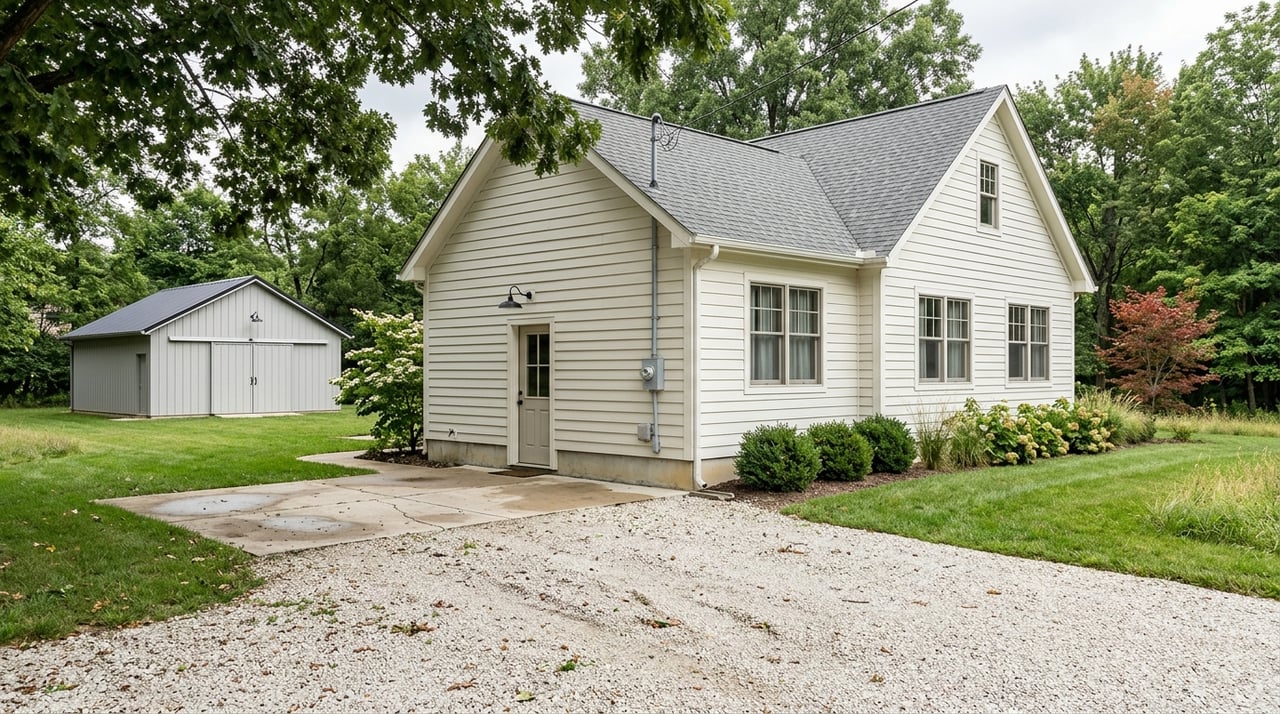
Dreaming about a little more space outside town? Around Elberfeld, buying acreage or an edge-of-town home can open up possibilities, but it also adds questions you do not usually face with a typical in-town lot. If you want to avoid surprises, it helps to understand how access, utilities, zoning, and drainage can affect the property before you make an offer. Let’s dive in.
Why Elberfeld Acreage Works Differently
Acreage and edge-of-town properties around Elberfeld often fall under Warrick County planning and zoning rules, which cover the Town of Elberfeld and surrounding county areas. That matters because these properties may sit in agricultural or one-family residential districts, and the rules can be more site-specific than what you would see in a standard subdivision.
In simple terms, a larger parcel is not just a house with more yard. Its value and usability often depend on how the land functions day to day, including road access, drainage, utility options, and what the zoning district allows.
Some homes near town may connect to municipal water or sewer, while others may rely on private systems. Since Elberfeld has its own water and sewer code and utility billing office, edge-of-town homes can vary quite a bit from one property to the next.
Check Access Before You Fall in Love
One of the first things to verify is how the property is legally accessed. Warrick County subdivision rules state that every lot with a structure must abut a dedicated public street or right-of-way. If a parcel touches a limited-access highway or railroad, you should not assume you can access it from that side.
If the property fronts an arterial or collector road, the county’s rules also note that residential lots should have added depth so the home can sit farther back from traffic. That can affect how a parcel feels, how a future build site lays out, and how much usable front area you really have.
Driveway permits can vary
Driveway approval is another important detail. Warrick County’s residential Improvement Location Permit packet says a driveway permit, if required, must be obtained before or at the time the permit is issued, and the County Highway Engineer handles that approval.
If the home or land fronts a state road, the process may be different. INDOT requires a driveway permit for access to INDOT-controlled roadways, so county-road access and state-road access should never be treated as the same thing.
A survey matters more on larger parcels
On acreage, visible features like fences, barns, tree lines, or gravel drives do not always match true property boundaries. Warrick County’s Surveyor notes that GIS property lines are estimated and directs the public to the Recorder’s Office for true property lines. The office also states that it does not survey private property.
That makes a private survey a smart part of due diligence, especially if boundary lines will influence where you build, park, fence, or store equipment.
Utilities Can Change the Whole Deal
Utility planning should start early, not after closing. For new residential construction, Warrick County’s ILP packet says a sewer or septic permit from the Health Department must be obtained before the Improvement Location Permit is issued. If a water tap is required, that must also be obtained.
That means the question is not just whether a property has enough land. It is whether the parcel can legally and practically support the way you plan to use it.
Sewer versus septic
If municipal sewer is available within a reasonable distance, Indiana’s onsite sewage rules say the property must connect to sewer rather than use a new onsite sewage system. If sewer is not available, county health department review becomes a key step in determining whether septic service is allowed and workable.
Warrick County’s Sanitarian and Environmental Health Services office handles septic permits, site evaluations, septic repairs, plan reviews for septic-related work, and testing of private and public water supplies. For buyers, that means septic questions should be part of your offer-stage research.
Private wells need ongoing attention
If a property uses a private well, the owner is responsible for water safety. Indiana Department of Health guidance recommends annual testing at minimum for bacteria and nitrate, along with added testing for fluoride, arsenic, lead, and copper at least every five years.
For many buyers, well water is not a deal breaker. It is simply a reminder that country and edge-of-town living can come with more hands-on system management.
Drainage and Floodplain Deserve Early Review
A beautiful piece of land can still bring challenges if drainage is poor. On larger parcels, runoff patterns matter more because added land disturbance and impervious surfaces can change how water moves across the property.
Warrick County’s stormwater department notes that the county operates under an MS4 stormwater permit and that enforcement can involve issues such as heavy erosion, failing septic systems, and illicit discharges. That makes drainage more than a comfort issue. It can become a practical ownership and compliance issue too.
Floodplain review can affect plans
Warrick County’s Area Plan page includes a floodplain development permit application, and the residential ILP packet says that sites in the flood plain may require a certified plot plan stamped by an engineer. If a home site, addition, or future outbuilding is anywhere near flood-prone ground, that review should happen early.
For buyers, this is one reason acreage should be evaluated beyond listing photos. A parcel can look open and attractive while still having constraints that affect where and how you can build or improve it.
Zoning and Future Plans Need a Reality Check
If you are buying with future plans in mind, zoning deserves careful attention. Warrick County recognizes land-division paths such as minor subdivisions, parcelization, and lot-line adjustments in agricultural and one-family dwelling districts under certain conditions.
That does not mean a future split will be simple. If you hope to divide acreage later, the zoning district and plat history of the parcel need to be reviewed before you assume that plan will work.
Bigger land does not mean fewer rules
Many buyers assume that once they are outside town, they can add a shed, barn, workshop, or garage whenever they want. In reality, Warrick County requires a permit for new construction or structural improvements over $2,500 in cost or 120 square feet, along with certain electrical, plumbing, and mechanical work over $750.
So even if the parcel feels rural, accessory structures may still trigger a permit. You will also want to confirm zoning fit and setback requirements before moving ahead.
Agricultural use and personal storage are not the same
There is an important county distinction for larger tracts. On parcels of 20 acres or more, structures used for agricultural purposes may be exempt from permit fees. But structures on 20 acres or more used for personal or residential storage still require a building permit under residential accessory permit fees.
That difference matters if you are picturing a shop building, detached garage, or storage barn for personal use. The land may be large, but that does not automatically make the project exempt.
A Smart Buyer Checklist for Elberfeld Acreage
Before you move forward on an acreage or edge-of-town home around Elberfeld, it helps to confirm the basics in writing and through the right local offices.
- Verify road frontage and legal access
- Confirm whether the property is on a county road or state road
- Ask whether a driveway permit is required
- Review whether sewer is available or septic approval is needed
- Check water source, including public service or private well
- Evaluate drainage patterns and any floodplain concerns
- Order a private survey if boundaries affect your plans
- Confirm zoning district and allowable uses
- Ask about permit requirements for future outbuildings
- Review parcel history if you hope to split the land later
Why Local Guidance Helps
Buying acreage is often less about the house itself and more about the land supporting your goals. You may be comparing utility setups, access approvals, drainage conditions, and future building plans all at once. That is a very different process from buying a home in a typical subdivision.
With the right guidance, you can sort through those details before they become expensive surprises. A careful review upfront can help you focus on properties that fit the way you want to live, not just the way they look online.
If you are exploring acreage or edge-of-town homes around Elberfeld, Marc Hoeppner can help you evaluate the practical side of the property so you can move forward with more clarity and confidence.
FAQs
What makes acreage homes around Elberfeld different from in-town homes?
- Acreage homes often depend more on site conditions like legal access, driveway approval, drainage, utility availability, well or septic status, and zoning limits than a typical in-town lot.
Do edge-of-town properties near Elberfeld always have public sewer?
- No. Some may connect to municipal service, while others may rely on private systems and county health department approvals.
Do I need a survey when buying acreage in Warrick County?
- A private survey is often a smart step because Warrick County states that GIS property lines are estimated and the county does not survey private property.
Can a property near Elberfeld use septic if sewer is nearby?
- Not always. Indiana onsite sewage rules say that if sanitary sewer is available within a reasonable distance, the property must connect to sewer instead of using a new onsite system.
Can I add a barn or shed on acreage in Warrick County later?
- Possibly, but you should first confirm zoning, setbacks, and county permit requirements because larger parcels are not automatically exempt from those rules.
Do properties on state roads near Elberfeld need special driveway approval?
- Yes. If the property connects to an INDOT-controlled roadway, a driveway permit from INDOT is required.