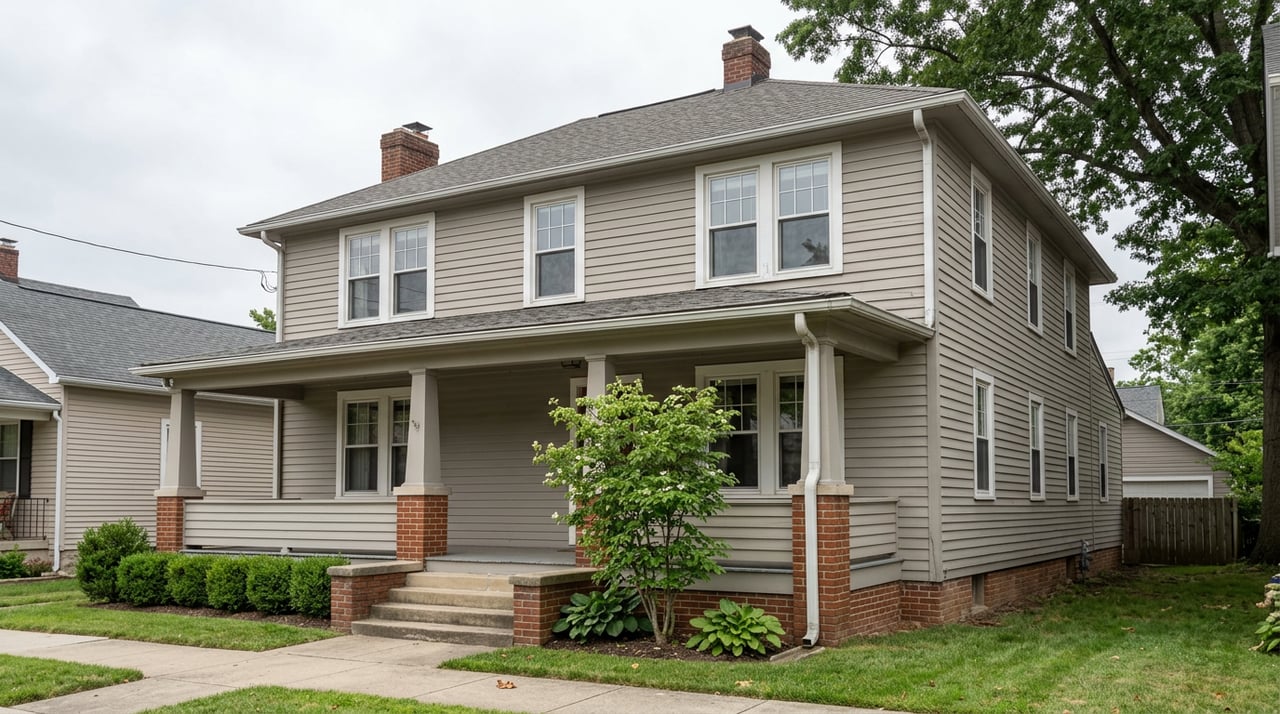
The seller had already done the hard part. Offer accepted, inspection scheduled, buyer's lender pre-approved. Then, a few days before closing, the loan officer calls with a question that has nothing to do with the roof, the foundation, or anything the buyer walked through during the showing: what brand is the electrical panel?
That question, not a cracked slab or a leaky roof, is the one that most often stalls a sale in Evansville's older neighborhoods. A home can sail through a walkthrough and still hit a wall once the inspection report lands on an insurance underwriter's desk. If the panel carries the wrong name, the buyer's insurer may decline to write a policy at all, and without insurance, most lenders won't fund the loan. The house didn't fail an inspection. It failed an underwriting review that happens after the inspection, usually with far less warning.
Why the Panel Matters More Than the Inspector's Checklist
Federal Pacific Stab-Lok and Zinsco panels were installed in millions of American homes, heavily so from the 1950s through the 1970s. Neither was ever formally recalled by the Consumer Product Safety Commission, but electricians, inspectors, and insurers across the country now treat them as if they were. Documented testing has found Federal Pacific breakers fail to trip during an overload or short circuit at rates approaching one in four. Zinsco panels carry a separate problem: aluminum bus bars that corrode internally, creating arcing risk in places nobody can see without opening the panel.
The result for a seller is not a repair request. It's a coverage decision made by someone who never visits the property. Many carriers will not issue a new homeowner's policy on a house with one of these panels present, full stop, and a buyer who can't get insured can't close.
What a Local Inspector Actually Finds Here
Bluegrass Home Inspections, which works throughout Vanderburgh County, describes what turns up across Evansville's older housing in blunt terms. The firm notes that Evansville's older housing stock commonly presents "aging electrical panels, cast iron drain stack corrosion, knob-and-tube wiring remnants, and foundation concerns related to river-area soil conditions." That last detail is specific to this market: homes near the Ohio River sit on sediment soils that behave differently than the clay and till found further inland, which shows up as jack and support beam failures in older basements more often than in newer subdivisions.
The same inspector notes that a typical single-family inspection here runs two and a half to four hours, but homes in the historic West Side district routinely run longer given the added complexity of century-old systems layered under decades of updates.
Where the Age of the House Predicts the Problem
Evansville's historic districts aren't uniform in age, and that matters more than most listing descriptions let on. A century-old cottage in one district is likely to be hiding a different hazard than a 1950s ranch in another, simply because of when each was wired and plumbed.
| Historic district | Recognition | Predominant build era | System most likely flagged |
|---|---|---|---|
| Culver Historic District | Listed on the National Register in 1984 | 1860s through early 1900s, on the former Robert Parrett farm | Knob-and-tube remnants, galvanized or lead supply lines |
| Bayard Park Historic District | Listed on the National Register in 1985 | 1890s through the pre-WWI era | Same-era wiring and plumbing, original cast iron drain stacks |
| Independence Historic District | Established 1982 | 19th century, Italianate to Victorian | Some of the oldest wiring and plumbing generations in the city |
| Riverside Preservation Area | Nationally designated in 1962 | Gilded age, 19th century | Extensive rehab history but original systems in unrenovated sections |
| Hebron Meadows Historic District | Established 2018 | 1950s post-war ranch homes | The Zinsco and Federal Pacific era specifically |
The pattern is straightforward once it's laid out this way. Homes in Culver, Bayard Park, Independence, and Riverside predate the Zinsco and Federal Pacific manufacturing window entirely, so their risk tends to be knob-and-tube wiring and galvanized or lead plumbing lines instead. Hebron Meadows, built during the exact stretch when Zinsco and Federal Pacific panels dominated new construction, is where those two specific brand names are most likely to still be bolted to a basement wall.
The Two Problems That Ride Along With the Panel
A corroded panel rarely travels alone. Cast iron drain stacks installed in the same era as those early panels are now well past the point where corrosion is a possibility rather than a certainty, and once a stack starts flaking from the inside, a sewer scope is the only way to see it before a buyer's inspector finds it during their walkthrough. Foundation movement tied to river-area soil conditions is the third leg of this stool, and it tends to show up as sticking doors, drywall cracks, or a support jack that's already failed from sitting in standing water at some point in the crawlspace.
None of these three items is a surprise to anyone who works with older homes here. What surprises sellers is the order in which they get discovered, usually all at once, after an offer is already signed.
What the Price Data Is Actually Showing
Evansville's median sale price depends heavily on which month and which measure you're looking at, and the spread is wide enough to say something about the market rather than just noise in the data.
- December 2025: median sale price of $151,000, down 8.6% year over year, homes selling in about 23 days
- October 2025: median sale price of $204,950, with days on market stretching to 62
- Most recent trailing 12-month window available: median sale price near $162,900, up 7% over the prior 12-month period
- Current active listings: average list price of $190,973
That's not a market correcting itself month to month. It's a market with two different products sitting inside the same median. A home with a modern panel, PEX or copper plumbing, and a dry crawlspace competes on price and condition. A home with a legacy panel and original cast iron competes on a longer runway, because the buyer pool willing to absorb an insurance delay or a post-inspection renegotiation is smaller. Sellers who treat these as the same market often price for the first group and get the timeline of the second.
A Pre-Listing Sequence That Avoids the Late Surprise
The fix isn't complicated, but it has to happen before the sign goes in the yard, not after an accepted offer.
- Open the panel and check the brand plate before listing. If it reads Federal Pacific, Stab-Lok, or Zinsco, assume a buyer's insurer will ask about it, because most now do.
- If the home predates 1940, budget for a sewer scope alongside the standard inspection. Cast iron drain stacks from that era are past their expected service life in most cases, and a scope is the only way to confirm condition before a buyer's inspector does.
- If a panel replacement is needed, know the process before you're mid-transaction. Electrical permits in Evansville run through the Area Plan Commission, and for parts of the city served by Duke Energy Indiana, the utility has to coordinate the disconnect and reconnect around the electrician's schedule. A full 200-amp service upgrade elsewhere in Indiana has typically run $1,800 to $3,500, and that work needs a permit and inspection before the utility will restore service, so it isn't something to start the week before closing.
Handled before the listing goes live, this is a repair line item. Handled after an accepted offer, it's a renegotiation, a delay, or a buyer who walks.
FAQ
Is a Federal Pacific or Zinsco panel officially recalled? No. Neither has a formal recall from the Consumer Product Safety Commission, but insurers, electricians, and home inspectors across the industry treat them as if they carried one, which functions the same way for a seller trying to close a sale.
Does knob-and-tube wiring automatically stop a sale in Evansville? Not automatically, but it appears often enough in the pre-1940 sections of the city's historic districts that most lenders and insurers want it addressed, or at least documented, before closing rather than discovered during it.
Do I need a permit to replace a panel here? Yes. Panel work is permitted through Evansville's Area Plan Commission, and any service upgrade involving the meter base requires coordinating a disconnect and reconnect with the local utility.
Does this only affect the oldest homes downtown? No. Hebron Meadows, a 2018-designated historic district of 1950s ranch homes on the far East Side, sits squarely inside the manufacturing years for both Zinsco and Federal Pacific panels, which makes it as relevant to this conversation as Culver or Bayard Park.
If you're weighing a sale of an older home anywhere in Evansville's historic pockets, it's worth finding out what's behind the panel cover before a buyer's underwriter does it for you. Marc Hoeppner can walk through what a pre-listing check typically turns up in your specific neighborhood, and get your free home valuation started while you're at it.