Open two tabs on Mount Vernon, Indiana, and you can end up with two different markets. As of late June 2026, Zillow's home value index put the average Posey County home at $241,834, up 2.1% over the previous year. Pull up Redfin the same afternoon and you'll find median sold prices for that same county down 23.4% year over year, to $206,000, for the three months ending in May 2026. Homes in that window sold in an average of 7 days, a sharp drop from 24 days the year before, even as the total number of sales fell.
Neither number is fabricated. Both trace back to real closings pulled from the same county. But a market that shows rising average values and falling median prices in the same breath isn't sending mixed signals by accident. It's telling you the sample underneath those numbers is too small to behave like a normal market, and that matters more to a buyer comparing Mount Vernon against other river towns than either headline figure does on its own.
A market too small to trust a single average
Posey County recorded just 14 home sales in May 2026, down from 17 the year before, according to Redfin's tracking for that period. Mount Vernon itself, the county seat, had an estimated population of 6,341 as of 2024. When a monthly sample sits in the teens, one riverfront sale at the high end or one distressed sale at the low end can swing a median hard in either direction within the same reporting cycle.
The inventory counts show the same instability. Zillow's own Mount Vernon page listed 48 homes for sale in early August 2026. A local MLS-fed count pulled two weeks later, on August 13, 2026, showed 32 active listings with a median list price of $222,450, an average of $139.92 per square foot, and homes sitting on the market for an average of 70 days. A 16-listing swing inside the same month isn't a data error. It's what a genuinely thin market looks like when you check it twice.
Here's how the numbers actually line up side by side:
| Source | Stat | Period | Figure |
|---|---|---|---|
| Zillow | Average home value, Posey County | Year ending June 2026 | $241,834, up 2.1% |
| Redfin | Median sold price, Posey County | 3 months ending May 2026 | $206,000, down 23.4% |
| Redfin | Days to sell, Posey County | 3 months ending May 2026 | 7 days, down from 24 |
| Local MLS feed | Median list price, City of Mount Vernon | August 13, 2026 | $222,450 |
| Local MLS feed | Average days on market, City of Mount Vernon | August 13, 2026 | 70 days |
Read across that table and the story isn't decline or acceleration. It's noise from a small denominator, sitting on top of a real structural shift that's worth understanding before you decide what those numbers mean for you.
The economy grew faster than the housing supply
Mount Vernon's industrial base is not small-town in scale. BWXT, SABIC, and the Port of Indiana-Mount Vernon anchor the local economy, according to a profile of the city published by Business View Magazine. The port itself is a 1,000-acre facility with 11 tenants, and it ranks as the nation's largest port for coal shipments and the 7th-largest inland port in the country, moving roughly 7 million tons of cargo a year. CountryMark's oil refinery and biofuels operations add another layer to the industrial footprint.
That base produced real results. Posey County posted 9.6% GDP growth between 2022 and 2023, the highest of any county in Indiana, according to Josh Armstrong, Chief Economic Development Officer at the Evansville Regional Economic Partnership, quoted in that same profile. Armstrong also noted the county has low unemployment and household income among the top five in the state.
What that growth didn't come with was housing to match it. Mayor Steve Loehr addressed the gap directly in the same interview: "We didn't set ourselves up well for replacing retirees or attracting new residents." A city can build a strong industrial base for decades and still end up short on the housing stock needed to keep new households moving in behind the retirees moving out. That's the mechanism behind the confusing price data. Demand from a growing, well-paid workforce is running into a housing supply that wasn't built with population growth in mind.
The city is tearing down before it builds up
Mount Vernon's response to that gap is visible right now in two very different projects moving on two very different timelines.
The near-term project is demolition. The city's Winter 2025-2026 Demolition Project is clearing multiple unsafe and deteriorated residential structures, including properties on Herbert Avenue, Wescott Street, South 24th Street, and Shawnee Drive, according to the city's own project listing. That's fewer homes counted in local inventory today, not more, even as it clears the way for safer redevelopment down the line.
The long-term project is the Ohio River Vision and Strategic Plan, a 50-mile regional initiative spanning Mount Vernon, Evansville, and Newburgh, funded through the state's READI grant program rather than a local tax increase. For Mount Vernon specifically, the plan calls for strengthening the downtown core along Main Street and turning underused sites, including current parking lots, into new housing, office, and retail space near the riverfront. In 2025, the project reached its 50% schematic design milestone, and public engagement in Mount Vernon culminated in a finalized design concept for Sherburne Park. The plan itself is described as a 20-year regional effort.
Put those two projects together and the picture gets clearer. Mount Vernon is removing old housing stock faster than it's adding new stock, and the new stock that is coming is still on the drafting table rather than a construction schedule. That's exactly the kind of transition that produces the price contradictions in the table above. It isn't a market correcting itself. It's a market waiting on supply that hasn't broken ground yet.
What this means if you're pricing Mount Vernon against other river towns
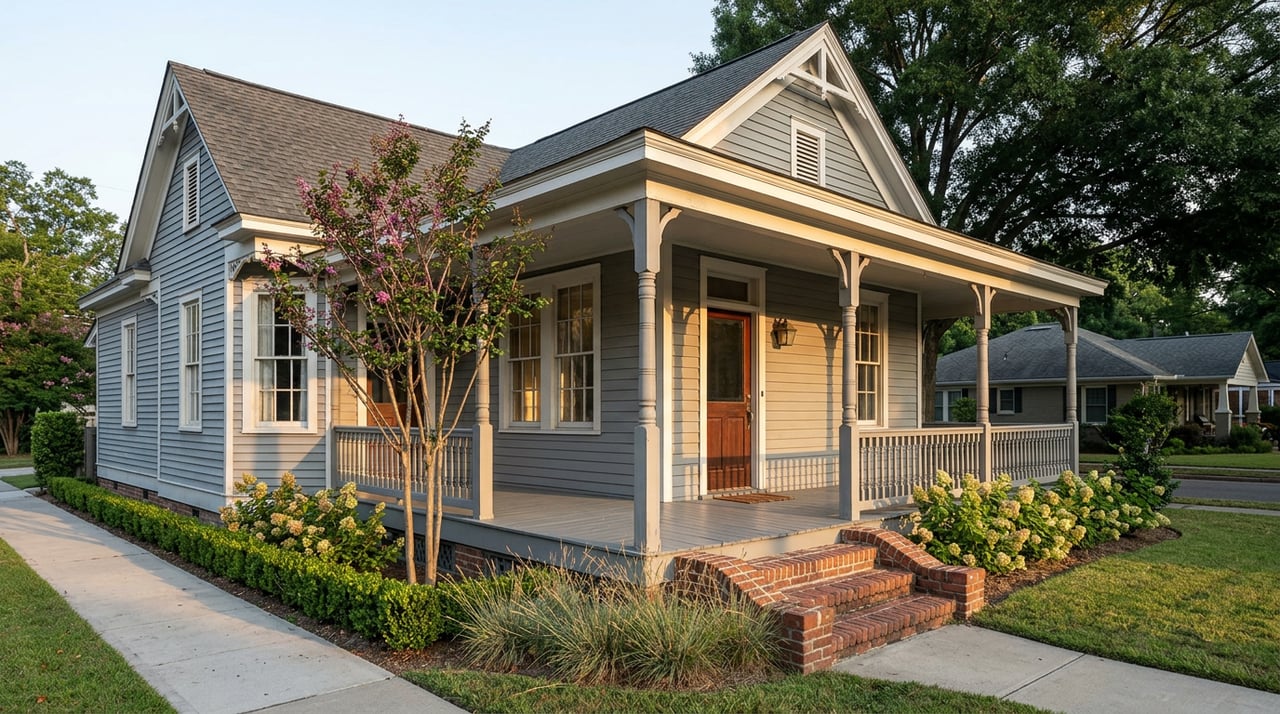
At a median list price of $222,450 as of mid-August 2026, you're not buying into a single, uniform product the way you might in a newer subdivision with tightly clustered comps. You're buying into whatever the existing housing stock happens to offer at that moment, and in Mount Vernon that stock varies widely. A move-in-ready two-bedroom on a small corner lot can list in the low $200s. A handful of blocks away, a larger lakefront home with private water access can run well above that. A century-old farmhouse with all-new electrical, plumbing, and roofing might sit right in between. Until the River Vision housing materializes, that's the texture of the market you're actually comparing.
A few things worth checking before you take any single number at face value:
- Ask whether a quoted stat covers the city of Mount Vernon specifically or all of Posey County. Many trackers, including Zillow's and Redfin's headline figures, report at the county level, which blends Mount Vernon with smaller towns like Poseyville, Griffin, and Cynthiana.
- Ask for a 12-month sales history rather than a single month's snapshot. With sales counts in the teens, one month tells you far less than a rolling year.
- Ask what's actually permitted or under construction downtown, not just what's proposed. The River Vision plan's 2025 schematic design milestone is real progress, but it's still years from producing move-in-ready units.
FAQ
Is Mount Vernon's housing market cooling down or heating up right now? Neither, cleanly. The city-level and county-level numbers disagree because the sample size is small enough that a handful of sales move the median in either direction. The more reliable signal is structural: a growing industrial workforce is running into a housing supply that hasn't caught up, which points toward continued tightness rather than a real slowdown.
When will new housing from the River Vision plan actually be available? Not soon. The plan reached its 50% schematic design milestone in 2025 and is explicitly described as a 20-year regional effort. Any new downtown housing tied to this specific initiative is a multi-year proposition, not something that shows up in next spring's listings.
Should I wait for that new development before buying in Mount Vernon? Given the timeline, waiting on this particular pipeline means waiting years. Today's market is existing housing stock, priced individually rather than as part of a subdivision, so the more useful comparison right now is against similar-vintage homes in other river towns in the corridor, not against a development that hasn't broken ground.
If you're weighing Mount Vernon against Newburgh, Evansville, or another river town in the corridor, the aggregator numbers alone won't get you there. Marc Hoeppner can walk you through the actual closed sales behind those headline figures and help you see what a given price point really buys right now. Get your free home valuation to see how your own numbers stack up against this market.