Choosing a Newburgh home often starts with one big question: how easy will it be for your child to get to school each day? If you are focused on ZIP code 47630, you already know that school assignment and commute logistics can change block by block. You want a home that fits your budget and your daily routine without surprises. In this guide, you will learn how Newburgh’s neighborhoods differ for school access, what to verify for any address, and a simple plan to compare options confidently. Let’s dive in.
Why address-level checks matter in 47630
In Newburgh, school assignment follows your exact street address within the Warrick County School Corporation. Two homes a few streets apart can feed different elementary or middle schools. This is why it pays to confirm each address rather than assume based on ZIP code or a subdivision name. You will also find nearby options across the river in Evansville or elsewhere in Warrick County, so understanding policies and commute patterns can help you plan long term.
How Newburgh neighborhoods differ for school access
Newburgh offers a mix of historic blocks near the river, newer subdivisions to the north and northeast, rural pockets to the east, and neighborhoods near the western county edge. Each area brings different trade-offs for school access, bus service, and daily driving.
Downtown and Riverfront Newburgh
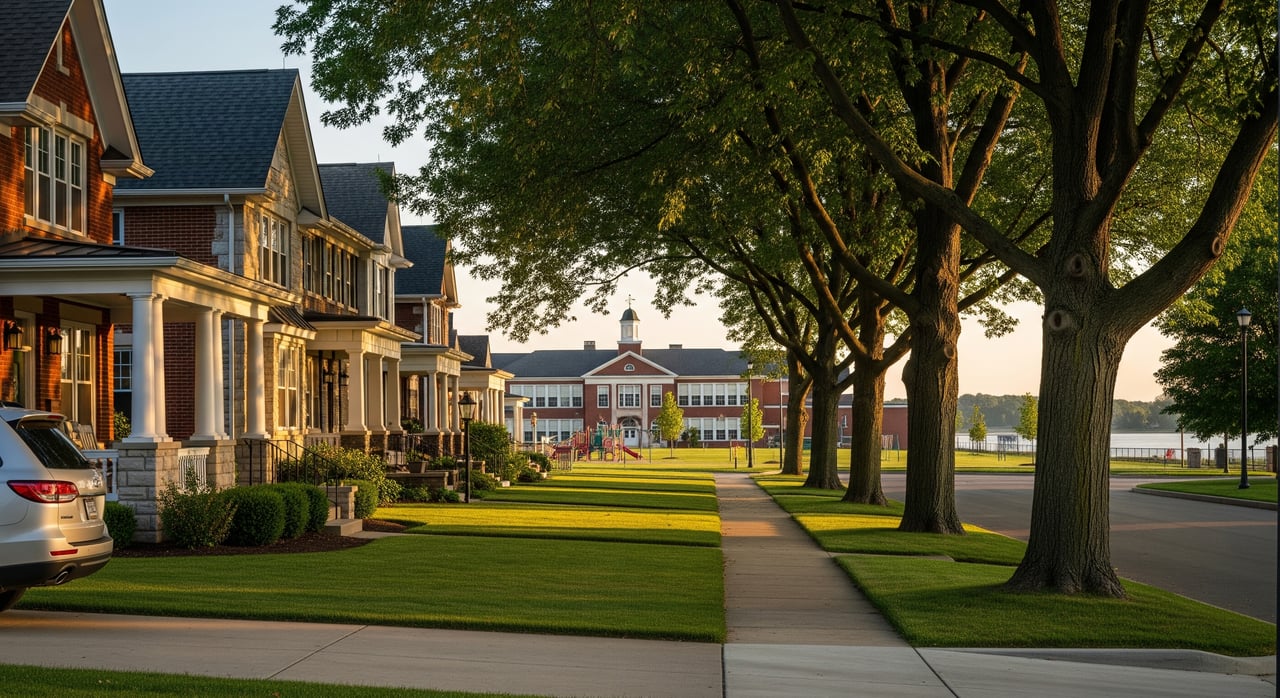
If you value being close to town, the historic core near the river may put you near local elementary campuses and everyday services. Streets here tend to have a classic grid pattern with older homes and smaller lots. Depending on the exact block, walking or biking to elementary school may be possible, subject to district policies and safe routes. Drives are usually short, though tight streets and on-street parking can make drop-off and pick-up more involved.
North and Northeast subdivisions
Many newer subdivisions north and northeast of the town center are popular with families. These areas often feature larger lots, cul-de-sacs, and organized neighborhood layouts. Elementary schools are typically within a short drive, with many morning trips under 10 to 15 minutes from within Newburgh. Feeder patterns can differ, so confirm which middle and high schools serve each address before you buy.
East and outskirts rural pockets
If you want space and a quieter setting, rural pockets east and north of town offer larger lots and country roads. The trade-off is time. Bus routes and morning drives tend to be longer, and some addresses may fall into different attendance areas within Warrick County. For high school, plan for 15 to 30 minutes or more, especially at start times when traffic is heaviest.
West and near-county-boundary neighborhoods
Closer to the western edge toward Evansville, you will find a mix of older neighborhoods and suburban streets. Proximity to Evansville can influence commute choices and access to private or parochial schools. If you are considering alternatives to your assigned public school, verify district boundaries carefully for parcels near municipal lines. Morning car or bus commutes are the norm here, with straightforward access to main corridors.
What to check for any street or subdivision
Make decisions with clear, verified information for the exact address you are considering:
- Assigned schools for elementary, middle, and high school through the Warrick County School Corporation and the Indiana Department of Education lookup.
- Feeder patterns from elementary to middle to high school, including any recent changes.
- School performance indicators from official report cards, such as ELA and math proficiency, growth measures, and graduation rate for high school.
- Student context, like enrollment, student–teacher ratios, and other demographics that help you interpret performance data.
- Morning commute times for each campus using a typical start time, plus potential walking or biking times where safe and allowed.
- Bus eligibility and typical stop distance, based on district transportation policies and route information.
- Walkability and safety notes, including sidewalks, crosswalks, and how drop-off and pick-up are designed at the school.
- Alternatives to assigned schools, such as district transfer or open-enrollment rules, nearby charter or magnet options, and private or parochial schools in the broader region.
- Boundary change outlook, especially if the district has discussed enrollment balancing or new construction that could adjust lines.
Simple 3-step comparison plan
Use a repeatable process for each address on your shortlist so you can compare apples to apples.
Step 1: Confirm assignments by address
Start with the district’s school-assignment tools for elementary, middle, and high school. Cross-check using the state’s lookup so you have two authoritative sources. If you are on a boundary or in a large subdivision, verify the parcel specifically rather than assuming one school serves the entire development. If you see a mismatch, call the district for clarification.
Step 2: Map morning commutes realistically
Enter your route with the school’s start time to capture true morning conditions. Save both a fast day and a slow day scenario, then repeat for each assigned campus. If walking or biking is an option, measure distance, check for sidewalks and controlled crossings, and note any stretches that lack infrastructure. For the bus, determine eligibility and the nearest stop, and ask the district about typical ride times.
Step 3: Review official metrics with context
Pull the most current state report cards for each assigned school. Look at proficiency and growth together so you see how students are progressing year over year. For high school, note graduation rate and college or career readiness indicators. Consider student demographics to understand differences between schools with different profiles.
Scenario-based guidance for your search
Use these common priorities to narrow focus areas, then verify each address.
- If you want potential walking access to elementary: Focus near the downtown and riverfront grid within a reasonable distance of campus. Confirm sidewalks and safe crossings, and check district policies on walkers.
- If you want short, predictable morning drives: Explore north and northeast subdivisions known for family-friendly layouts and proximity to schools. Validate feeder patterns so you know which middle and high schools align with each address.
- If you want acreage and a quiet setting: Look at east and outer pockets, then plan for longer bus routes and car times. Balance the space you want with your tolerance for commute time, especially for high school.
- If you want options near Evansville: Consider the western edge for straightforward access to regional roads and potential proximity to private or parochial schools. Double-check public-school boundaries for parcels close to municipal lines.
What we look at for drop-off and daily logistics
Convenience is not just distance. It is the daily flow that makes your routine smooth.
- School-site design: loop or curbside drop-off, where to queue, and where congestion forms.
- Street capacity: narrow streets, on-street parking, and choke points near the school.
- Safe routes: sidewalks, marked crosswalks, crossing guards, and lighting.
- Bus patterns: where buses stage, how students load and unload, and typical timing.
- Weather planning: how rain or snow changes your drop-off routine and timing.
How we verify for clients
Buying for school access benefits from a clear, methodical process. Here is how we work when clients ask us to validate school logistics for a specific address:
- Confirm the assigned elementary, middle, and high schools using district and state tools for the exact parcel.
- Map morning drive times for each campus using realistic bell times, plus optional walking and biking checks where safe and allowed.
- Review bus eligibility and request or review route information when available, including typical stop distance and estimated ride length.
- Pull the most current official report cards for assigned schools and summarize key performance and growth indicators with context.
- Note walkability and site logistics with a quick digital review of sidewalks, crosswalks, and drop-off design, then schedule a drive-by at bell times when possible.
- Document the sources and the date of each check so you know when the data was verified.
This structured workflow helps you compare different homes with confidence, even if they are just a few streets apart.
Planning your next steps
If school access is a top priority, treat it like a core feature of the home you buy. Start with the shortlist of areas that match your daily routine, then validate each address with the same set of checks. Keep notes on commute times, bus options, and any practical issues you notice during a site visit. When you combine verified school assignment, clear commute data, and a home that fits your needs, you will feel better about your choice on day one and year five.
Ready to compare specific addresses in Newburgh 47630? Our team pairs local knowledge with a step-by-step validation process so you can move forward with clarity. For a custom school-access map, commute estimates, and property matches that fit your goals, connect with Marc Hoeppner and The Realty Collective today.
FAQs
Which Newburgh neighborhoods have the shortest trips to elementary schools?
- Downtown and riverfront blocks, plus many north and northeast subdivisions, often offer the shortest drives; verify your exact address with district tools and map travel times at school start hours.
Can my child walk to school in 47630?
- It depends on your exact block, sidewalk coverage, safe crossings, and district policies for walkers; measure distance and review routes before you decide.
How do I confirm my assigned schools for a Newburgh address?
- Use the Warrick County School Corporation assignment resources and the state school lookup to verify elementary, middle, and high schools for your specific parcel.
Are school boundaries in Warrick County likely to change soon?
- Districts adjust boundaries at times to balance enrollment or reflect new construction; contact the district and review recent announcements for the most current information.
What are my options if I prefer a different school than the one assigned?
- Ask the district about transfer or open-enrollment policies, and consider nearby charter or private/parochial options if those align with your family’s plans.